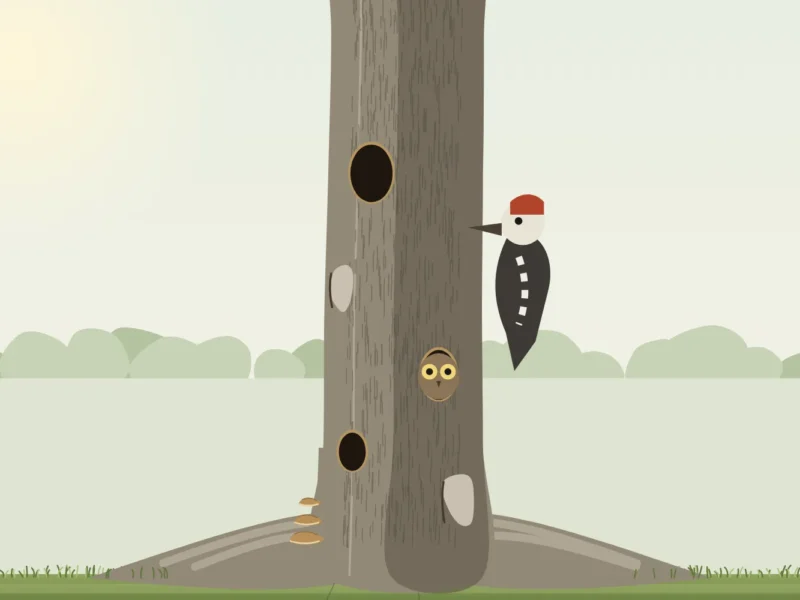
Why we turn some hazardous trees into wildlife snags
When a tree has to come down, it doesn’t always have to go all the way. Here’s how a carefully made snag…
Tree removal is the planned, careful take-down of a tree when keeping it is no longer the right choice for the tree or the property.
Sometimes a tree is no longer suited to its location or condition. Removal should follow a clear understanding of the site and the options.
Common requests

The Magnolia approach
Access, nearby structures, utilities, condition, and the work area all affect scope. Share those details when you request service.
Consider whether care, monitoring, or removal best fits the situation.
Tree Risk & ConsultingAccount for buildings, access, utilities, and the usable work area.
Clarify debris handling and whether stump work is included before work begins.
Consider how the space will be used and whether a better-suited tree belongs there.
Tree CareRecommendations may be informed by AIM, our system of baselines, measurements, and records kept over time. How AIM works

Another option
When a tree needs to be removed and is judged a good candidate, we can reduce the hazard and leave a shorter trunk standing as a wildlife habitat tree, with nest cavities for birds. We inspect it every year.
Learn about wildlife habitat treesHow pricing works
Every tree and every site is different, so we don’t post prices. We look at the trees, talk through what you want, and put the scope and price in writing. Work begins only after you’ve agreed to it.
Your trees, your site, and what you’d like to change.
Which trees, what work, and what it costs.
Nothing starts until the scope and price are settled.
We map your trees in ArborNote and email you a clear work order on every job. See how transparent tree care works
No. Size, location, condition, access, and nearby structures all shape how a removal is planned. We review the tree and site before confirming the scope.
Do not assume it is included. Stump work and debris handling should be discussed and specified in the agreed scope.
Yes—request an evaluation if you are unsure whether removal is appropriate. The assessment can inform the available management choices.
Not always. When a tree needs to be removed and is judged a good candidate, we can reduce the hazard and leave a shorter trunk standing as a wildlife habitat tree (a “snag”). Suitability depends on the tree and the site.
Keep reading
When a tree has to come down, it doesn’t always have to go all the way. Here’s how a carefully made snag…
Continue exploring
Let’s start with a conversation
Tell us what you’re noticing. We’ll help you understand it—and decide what, if anything, should happen next. We reply to every request the same day.
Have photos or a video of the tree? Text them to (870) 340-2074.


