“When should I prune my trees?” is one of the questions we hear most. The honest answer is that it depends on the tree, what you want the pruning to do, and the tree’s condition. There are still some reliable patterns, and knowing them helps you plan the work and avoid mistakes that set a tree back.
The short answer
For most shade trees in Arkansas, late winter, while the tree is dormant and before the buds break, is a good time for planned structural pruning. Dead, broken, or hanging branches can be removed any time of year, because leaving them is usually the bigger risk. Some flowering trees, and some species with disease concerns, have their own best timing. We cover those below.
Why late winter works well
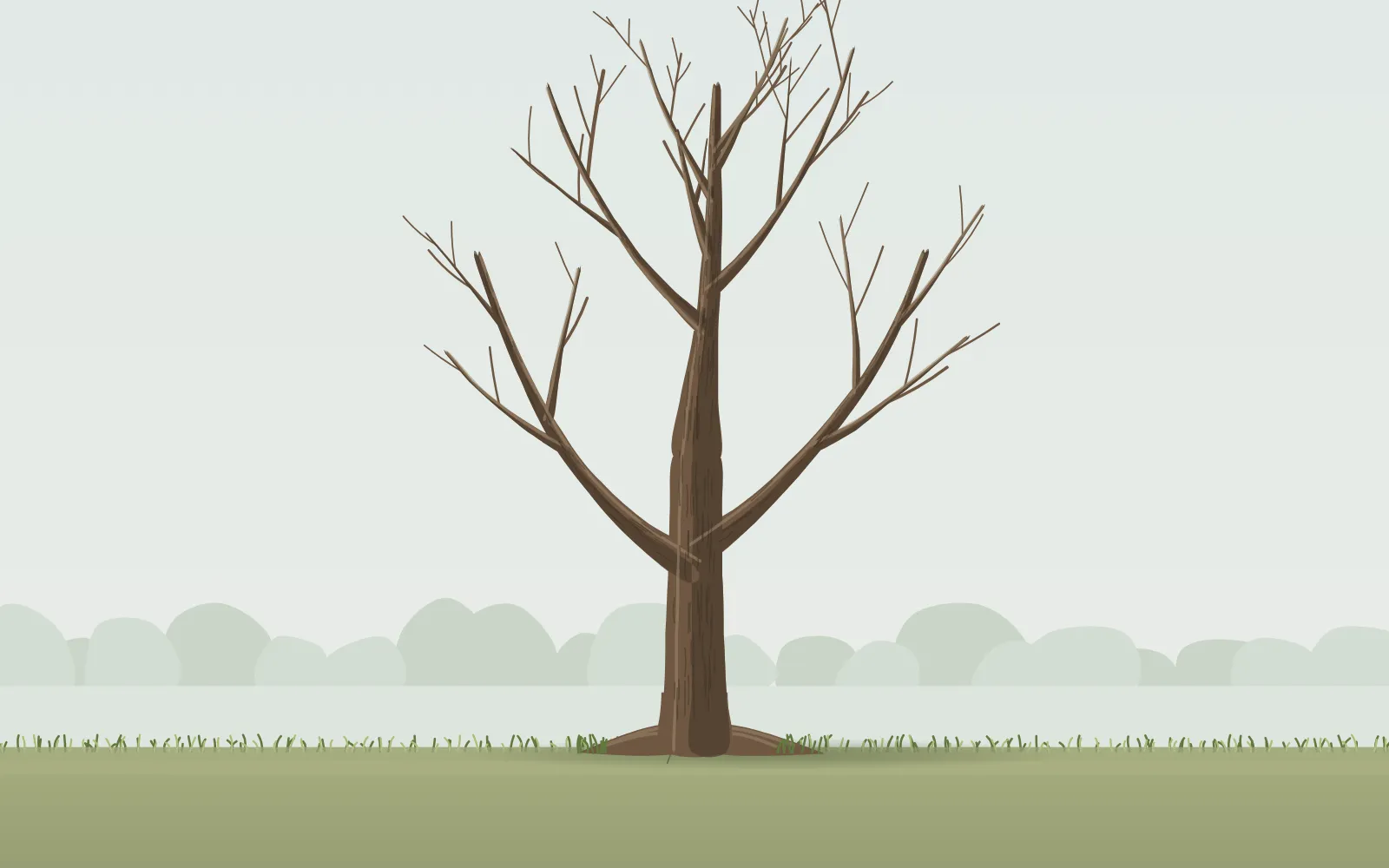
When a deciduous tree has dropped its leaves, you can see its whole structure: which branches compete with each other, where limbs cross and rub, and how the canopy is balanced. That makes it easier to choose the right cuts and to make fewer of them.
Dormant pruning also lines up well with the tree’s own schedule. As growth resumes in spring, the tree begins forming woundwood around fresh cuts. Many insects and disease organisms are also less active in cold weather.
Late winter doesn’t mean “any day in winter,” though. Avoid pruning when wood is frozen or during an ice event. Ice storms are when damaged branches and hazards pile up, and that’s the time to deal with safety, not shaping.
Spring: go easy during leaf-out
In early spring a tree spends a lot of stored energy pushing out new leaves and shoots. Heavy pruning right then removes leaves the tree has just paid for, and the bark tears more easily during this flush of growth. Light corrective cuts are fine, and dead or damaged wood can always come out. Save major structural work for later in the season or for the next dormant period.
Summer: light work, and watch the heat
Summer is a reasonable time for light pruning, such as clearance over a walk or a small correction. With the tree in full leaf you can see exactly how much shade and clearance you’re working with.
Arkansas summers bring heat and, in many years, dry spells. A tree that’s already stressed by drought doesn’t need the extra stress of losing a lot of live canopy. If your trees are struggling through a dry stretch, postpone heavy pruning and focus on watering and the root zone.
Flowering trees have their own calendar
- Spring-blooming trees, such as dogwood and redbud, set their flower buds the year before. If you prune them in winter, you cut off this spring’s flowers. Prune them soon after they finish blooming.
- Summer-blooming trees, such as crape myrtle, bloom on new growth, so late-winter pruning works well.
A special note on crape myrtles: the practice of chopping them back to stubs every year, sometimes called “crape murder,” isn’t pruning. It leaves knobby stubs and weakly attached shoots. A well-pruned crape myrtle keeps its natural shape. Usually that means removing crossing, rubbing, and inward-growing branches and little else.
Oaks and disease timing
Some tree diseases can spread through fresh pruning wounds during the growing season. Oak wilt is the best-known example. In areas where it is a concern, many arborists avoid pruning oaks from spring into early summer, when the insects that can carry the fungus are most active. If you have oaks, ask whether this applies to your trees and your part of the state before scheduling non-urgent work.
How much is too much?
More pruning isn’t better pruning. Each live branch removed takes away leaves that feed the tree. Mature trees in particular have limited ability to replace what they lose. Many arborists follow a rule of thumb of removing no more than about a quarter of a tree’s live canopy in a year, and often much less for mature or stressed trees. Good pruning has a clear objective, such as structure, clearance, or removing deadwood. It stops when that objective is met.
Young trees: small cuts now, fewer problems later
The best time to shape a tree’s structure is while it’s young. A small cut on a young tree can prevent a large, problematic cut decades later. Structural pruning of young trees focuses on encouraging one strong central leader and well-spaced branches. Done every few years, it’s one of the most valuable things you can do for a tree’s future.
What to avoid, whatever the season
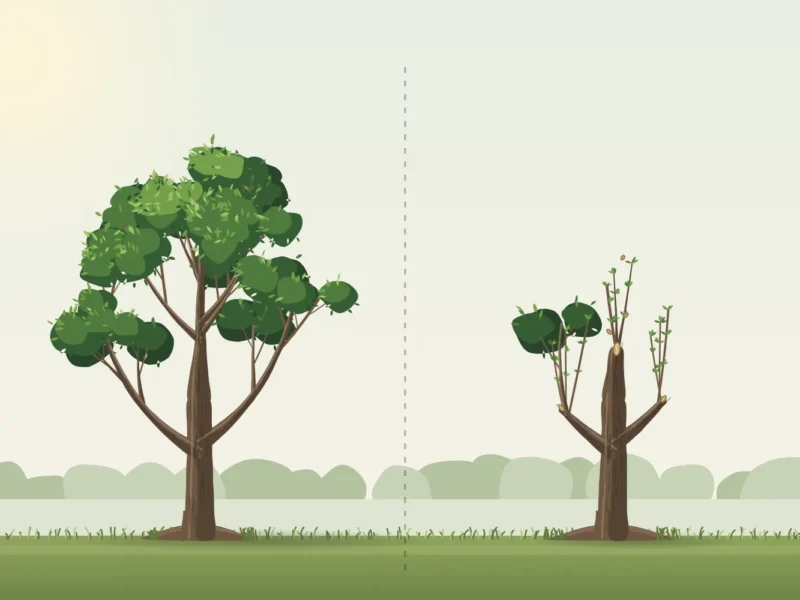
- Topping: cutting main stems back to stubs. It invites decay and produces weak, fast-growing sprouts. It is not an acceptable way to reduce a tree’s size.
- Flush cuts: cutting a branch off flush with the trunk. This removes the branch collar, the tissue that helps the tree seal off the wound. Proper cuts are made just outside the collar.
- Leaving stubs: cutting too far out leaves a stub that dies back and lets decay in.
- Stripping the interior (sometimes called “lion-tailing”): removing most inner branches and leaving foliage only at the tips. It shifts weight to the ends of limbs and can make them more likely to fail.
- Climbing spikes on trees being pruned: spikes wound the trunk with every step. Industry practice reserves them for trees being removed.
Planning your pruning
If you’re not sure what your trees need, start by writing down what you want: more light, clearance over the roof, a safer canopy over the driveway, better structure on a young tree. Then look for an arborist who explains the objective and the cuts, puts the scope in writing, and follows accepted industry standards such as ANSI A300.
Timing matters, but the right cut in the right place matters more.
General education only. Every tree, species, and site is different, and this article is not advice about a specific tree.
Planning pruning for your trees? Learn about our Professional Pruning service, or call or text us to talk it through.