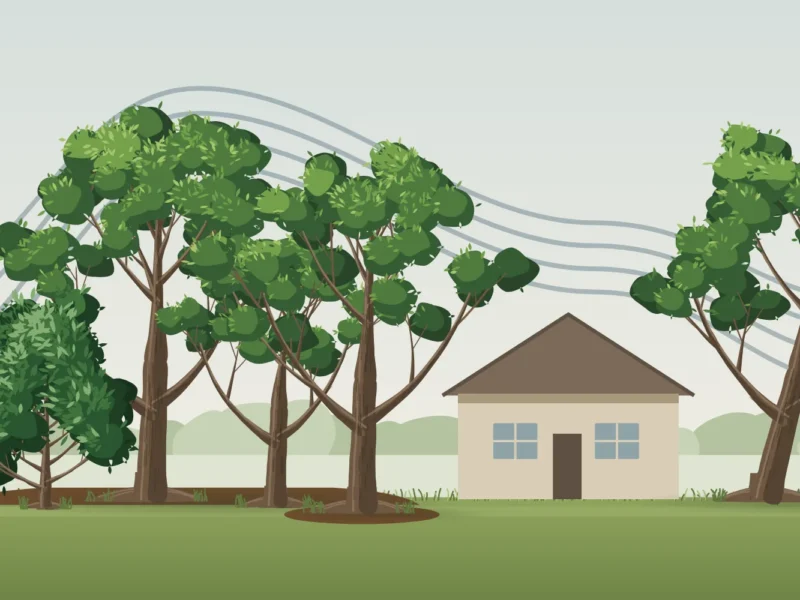
Arkansas gets its share of severe weather: spring thunderstorms, high winds, and the occasional ice storm that loads branches until they give way. When the weather clears, it’s natural to want to get outside and start cleaning up. Before you do, take a breath and put safety first. Storm-damaged trees can be unpredictable, and many post-storm injuries happen during cleanup.
Step 1: Stay safe
- Stay away from downed power lines, and anything touching them: trees, branches, fences, puddles. Assume every downed line is live. Don’t try to move branches off lines yourself.
- Call your utility to report downed lines or trees on lines.
- Call 911 for any life-threatening emergency, such as someone trapped or injured, or a tree on a house with people inside and a risk of collapse.
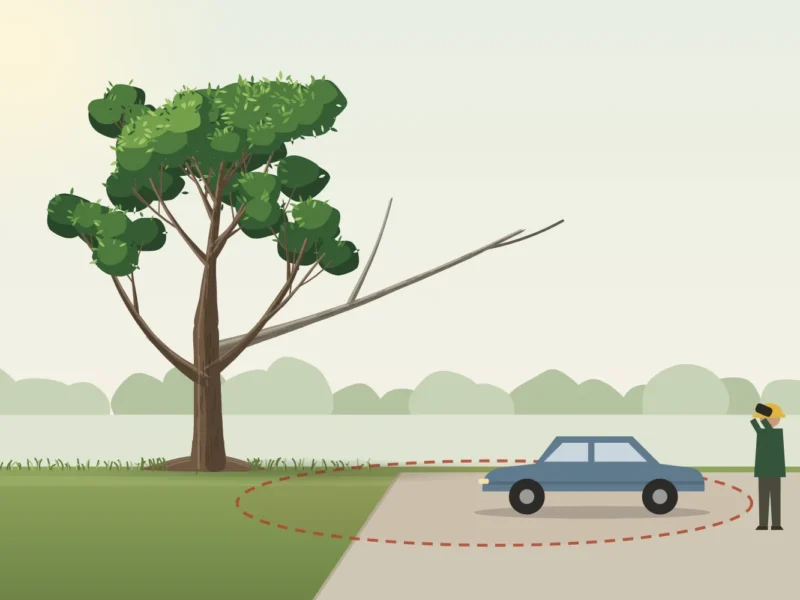
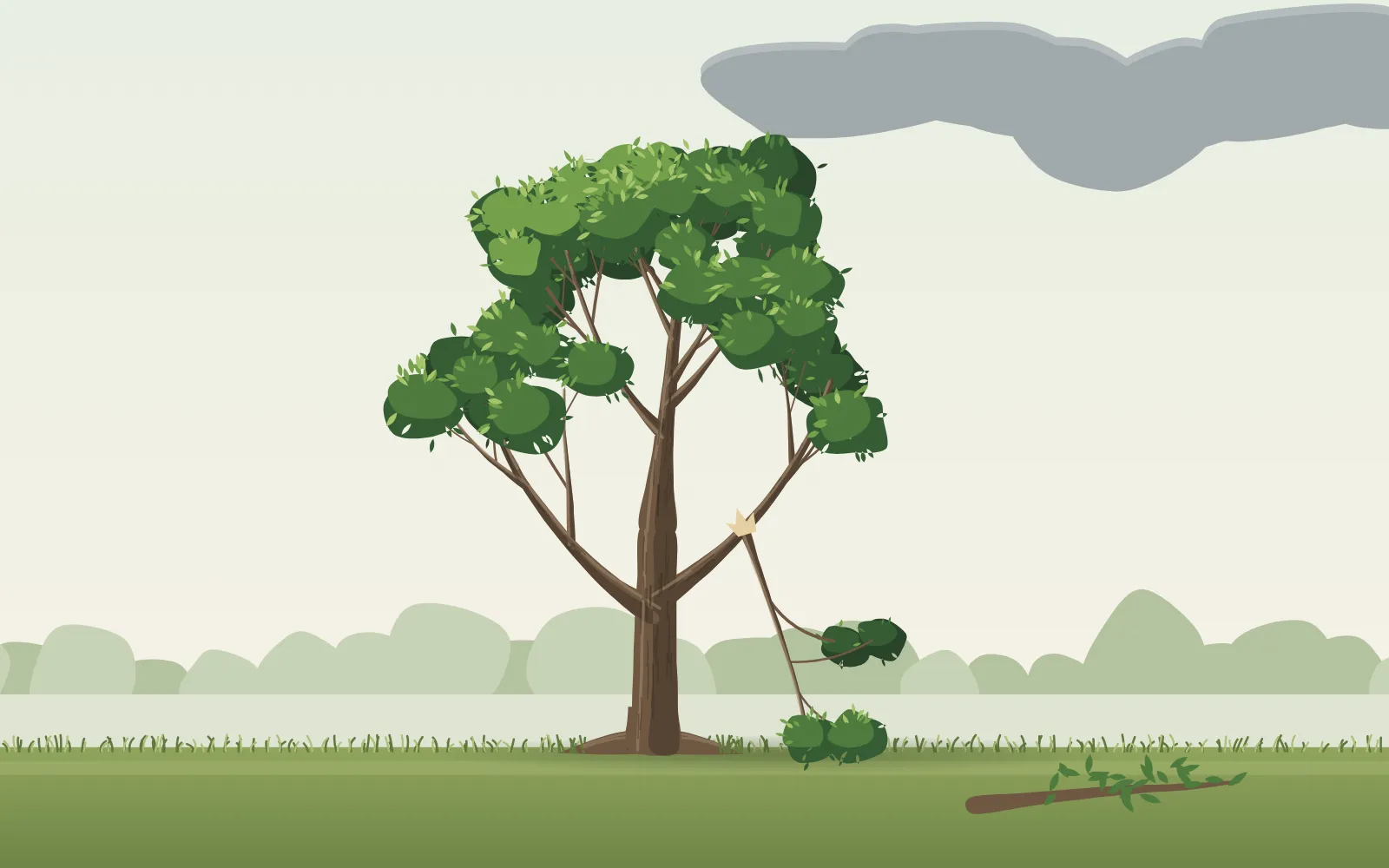
- Don’t stand under damaged trees. Broken branches hung up in the canopy, often called “hangers” or “widowmakers,” can fall without warning, even hours or days later.
- Keep children and pets away from damaged trees and debris.
Step 2: Look carefully, from a safe distance
Walk your property and look up. You can learn a lot from the ground without touching anything. Check for:
- Hanging or broken branches caught in the canopy.
- Cracks or splits in the trunk or where major limbs join, especially where the tree forks into two stems.
- A new lean, particularly if the soil or turf around the base is cracked, lifted, or heaving on one side. That can mean the roots have shifted.
- Exposed or broken roots at the base.
- Broken tops, or large limbs torn away, leaving jagged wounds.
- Bark torn loose from the trunk or major limbs.
- Branches resting on the roof, gutters, fences, vehicles, or wires.
- Trees leaning against other trees or against structures.
Take photos of what you find from several angles. They help if you file an insurance claim, and they help an arborist understand the situation quickly.
Step 3: Know what to leave to professionals
Some cleanup is simple: small branches on the lawn you can pick up by hand. But leave these to trained professionals:
- Anything near power lines. Only utility crews or qualified line-clearance professionals should work near energized lines.
- Branches under tension. Limbs bent or pinned by other debris store energy and can spring violently when cut. This is a leading cause of chainsaw injuries.
- Work off the ground. Climbing or using a ladder with a chainsaw is dangerous even in good conditions.
- Large limbs and trees on structures. Removing weight in the wrong order can cause further damage or collapse.
Step 4: Don’t assume every damaged tree must go
Storm damage can look dramatic, but many trees can recover with proper care. A tree that has lost some branches, or has a broken limb that can be removed cleanly, may have plenty of healthy years ahead.
On the other hand, some damage is serious: a large split in the main trunk, a significant lean with root movement, or the loss of most of the canopy. An arborist can evaluate the tree, what’s nearby, and your options. Those include pruning damaged limbs, monitoring, supporting the tree, or removal when it’s genuinely the right choice.
Avoid making permanent decisions in the first hours after a storm, unless there’s an immediate hazard.
A word about ice storms
Ice is especially hard on trees. A thick coating can multiply the weight a branch carries, and limbs may bend dramatically or snap. While trees are still iced:
- Don’t shake or knock ice off branches. Frozen wood is brittle, and you’re more likely to break branches, or have them fall on you, than to help.
- Stay out from under iced trees until the ice melts. Branches can keep failing for hours.
- Let bent branches recover on their own. Many bend under ice and straighten as it melts.
Once the ice is gone, walk the checklist above. Some damage, like cracks at branch unions, only becomes visible after the load is off.
Step 5: Beware of storm chasers
After major storms, crews sometimes arrive from out of town and go door to door. Many are honest. Some are not. Protect yourself:
- Be cautious of anyone who pressures you to decide on the spot, or who offers to top your trees.
- Ask for proof of insurance, and confirm it’s current. Ask for certificates sent directly from their insurance provider.
- Get a written scope and price before work starts: which trees, what work, cleanup, and cost.
- Avoid paying everything upfront.
- Ask about qualifications, such as whether an ISA Certified Arborist will evaluate the trees.
Before the next storm
The best storm preparation happens long before the forecast. A periodic look at your trees can catch dead branches, weak forks, and other issues while they’re easier to address. Good structural pruning on younger trees, and keeping mature trees healthy, both help trees handle wind and ice.
General education only. This checklist does not replace an on-site evaluation. If anyone is in danger, call 911.
Concerned about a tree after a storm? Learn about Tree Risk & Consulting, or call or text us with photos of what you’re seeing.